
Smart Monitoring of Bridge Performance
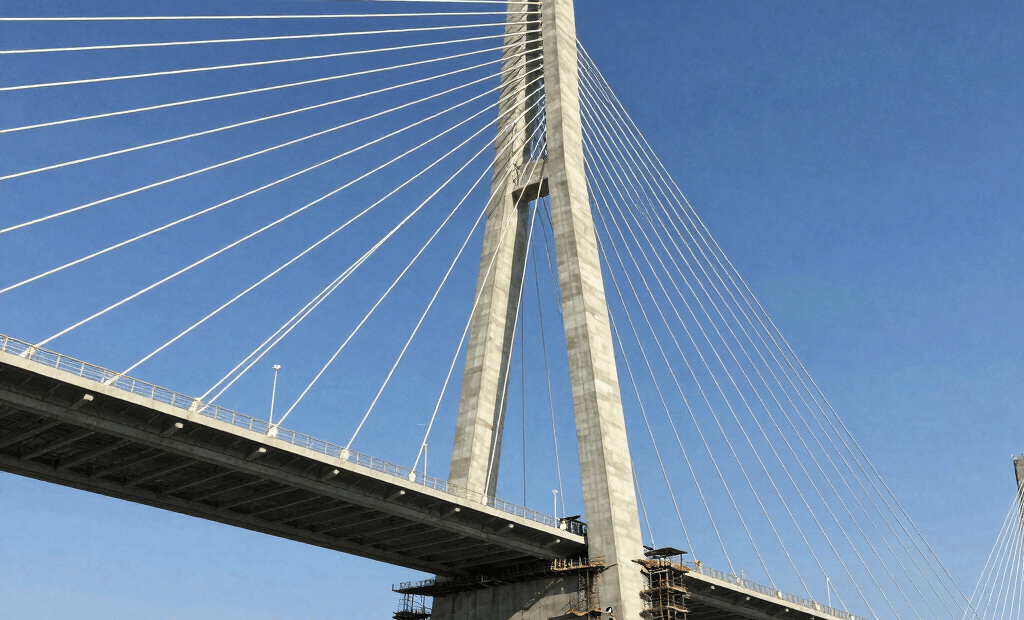
Smart Monitoring of Bridge Performance. Most existing bridges throughout the Netherlands and across Europe were built between 1950 and 1970. These structures often critical components of transportation networks are not only approaching or exceeding their intended service life but were also designed under assumptions and standards that no longer align with current traffic load requirements specified in modern codes such as Eurocode (EN 1992-2) and the Dutch NEN 8702. According to these updated norms, a significant number of bridges are considered structurally inadequate. Nevertheless, the predicted structural behavior based on calculations does not always match how a bridge actually performs in practice. This means that some bridges may be scheduled for replacement or strengthening even when they do not need major structural repairs. Structural health monitoring (SHM) systems can provide valuable data on real-world bridge behavior and failure risks, enabling asset managers to plan interventions that are both timely and appropriately scaled. The anticipated advantages include substantially lower maintenance expenses, fewer traffic disruptions, and enhanced safety. That said, earlier versions of SHM systems have rarely been integrated into the daily asset management routines of infrastructure authorities. This is largely due to their high costs, complicated installation processes, and limited data processing capabilities for directly assessing bridge reliability. With the emergence of affordable sensors and the advancement of response prediction algorithms, a new generation of SHM systems often referred to as SHM2.0 has become possible. At present, SHM2.0 technologies are already being used to track fatigue damage in offshore wind turbines, but they have not yet been adopted for bridge monitoring applications.
Bridge Monitoring
Intelligent, affordable solutions monitor bridge condition every day without complexity. Modern advancements in sensor technology and data processing have made it possible to keep a constant, watchful eye on bridge performance using systems that are both smart and cost-effective. Unlike earlier generations of monitoring tools, which required expensive equipment, complicated installation, and specialized expertise to interpret results, today's intelligent solutions are designed for simplicity and accessibility. These systems can be deployed quickly, operate continuously without heavy maintenance, and deliver clear, actionable information to asset managers in real time. By tracking key indicators such as vibrations, strains, displacements, and environmental conditions on a daily basis, they provide an accurate picture of structural health without overwhelming users with raw data. Alerts are triggered only when measurements deviate from expected patterns, allowing teams to focus their attention where it is truly needed. This ease of use means that even agencies with limited technical resources can integrate bridge monitoring seamlessly into their everyday routines, moving from reactive repairs to proactive, data-driven maintenance. The result is longer bridge lifespans, fewer unexpected closures, and a simpler path to safety and efficiency.
Sensors
Low-cost sensors gather reliable data without complex installation. One of the most significant breakthroughs in modern structural health monitoring is the availability of low-cost sensors that deliver accurate, dependable data without requiring elaborate setup procedures. Unlike traditional monitoring equipment, which often involves expensive hardware, specialized cabling, time-intensive calibration, and trained technicians for installation, these new generation affordable sensors are designed for simplicity and accessibility. They can be mounted on bridge surfaces, embedded in key structural elements, or attached to existing components using straightforward methods such as adhesive bonding, magnetic clamps, or basic bolting often with minimal disruption to traffic or ongoing operations. Many of these sensors operate on low power, harvest energy from ambient sources like vibration or sunlight, and communicate wirelessly with central data collection units, eliminating the need for extensive wiring or dedicated power supplies. Calibration is largely automated, and the sensors come pre-configured for common measurement types such as strain, acceleration, temperature, and inclination. This plug-and-play nature significantly reduces the barrier to entry for infrastructure agencies, allowing them to deploy monitoring networks across large bridge inventories without specialized engineering support for every installation. The result is a cost-effective, scalable approach to data collection that brings continuous bridge assessment within reach for even budget-constrained organizations. With reliable data flowing in from these simple, affordable sensors, asset managers can make informed decisions about maintenance, repair, and replacement without the overhead traditionally associated with structural monitoring.


Algorithms
Advanced algorithms estimate structural responses and detect fatigue damage. Beyond the hardware itself, the true intelligence of modern structural health monitoring lies in the advanced algorithms that process raw sensor data into meaningful insights. These sophisticated computational methods are designed to estimate how a bridge responds to everyday traffic, wind, temperature changes, and other live loads without requiring a full physical inspection or complex finite element modeling each time. By applying techniques such as modal analysis, pattern recognition, and machine learning, the algorithms can identify subtle shifts in structural behavior that may indicate developing issues, including the gradual formation of fatigue cracks in steel components or the progressive loss of stiffness in concrete elements. Importantly, these algorithms are capable of distinguishing between normal, expected variations (such as temperature-related expansion or contraction) and anomalous responses that could signal damage or deterioration. When it comes to fatigue damage a critical concern for older bridges subjected to millions of repetitive traffic loads the algorithms excel at detecting small but cumulative changes in stress cycles that would be invisible to the naked eye or sporadic manual inspections. They can estimate remaining fatigue life, prioritize which details deserve closer examination, and trigger alerts when measured responses approach predefined safety thresholds. Unlike earlier generations of monitoring systems that buried users in raw data streams requiring expert interpretation, today's advanced algorithms present results in clear, actionable formats such as traffic-light status indicators, trend graphs, or risk matrices. They learn and adapt over time, improving their accuracy as more data becomes available.
Reliability: Designed to transform data into actionable insights for asset managers. Collecting data is only half the challenge the true value of any structural health monitoring system lies in its ability to convert raw measurements into clear, trustworthy, and actionable information. Reliability, in this context, means that asset managers can have full confidence in the insights generated by the system, from daily performance summaries to urgent safety alerts. A reliable monitoring solution does not overwhelm users with false positives, ambiguous readings, or technical jargon. Instead, it filters, analyzes, and presents data in ways that directly support decision-making: Should this bridge be scheduled for repair now, or can it wait another year? Is that crack a cosmetic concern or a sign of impending fatigue failure? Which span shows the most urgent need for intervention? To achieve this level of reliability, modern systems integrate multiple layers of quality control. Sensors are cross-calibrated to detect anomalies in their own readings. Algorithms are validated against known benchmark problems and field-tested on real bridges. Data is redundantly stored and backed up to prevent loss. Furthermore, the system provides confidence metrics alongside every insight quantifying the uncertainty associated with each estimate so that managers can weigh risks appropriately. Dashboards are designed with end-users in mind, offering visualizations that highlight trends, compare current behavior to historical baselines, and flag deviations in intuitive ways such as color-coded maps or time-series graphs with alert markers. Ultimately, the goal is to turn a stream of numbers into a practical roadmap for maintenance. When asset managers open their monitoring dashboard each morning, they should see not just voltages and frequencies but answers to real-world questions: Is this bridge safe for heavy truck traffic today? How much remaining fatigue life does this critical detail have? Where should I send my inspection crew next week? By delivering reliable, actionable insights, the system empowers agencies to move from reactive emergency repairs to planned, cost-effective, and safety-driven intervention strategies. That is the meaning of reliability in structural health monitoring not just accurate data, but data you can act upon with confidence.
Reliability


Insights
Advancing bridge monitoring with smart sensor systems is about transforming a bridge from a passive span of concrete and steel into an instrumented, self-aware structure that continuously reports its own condition. Instead of relying on occasional visual inspections, engineers can deploy a carefully optimized network of sensors that captures vibration, strain, displacement, tilt, temperature, corrosion activity, acoustic emissions, and cracking in real time. The best systems combine several sensing technologies because no single sensor can tell the whole story. MEMS accelerometers are excellent for tracking dynamic vibration and modal behavior, and modern versions are small, rugged, and stable enough to remain reliable for years. Vibrating wire strain gauges provide long-term stability for measuring stress and deformation in concrete and steel, while fiber Bragg grating sensors offer high precision and immunity to electromagnetic interference. Distributed fiber optic sensing goes further by turning a single cable into thousands of measurement points, allowing acoustic and strain monitoring across long stretches of a bridge. For displacement and deflection, laser systems, radar interferometry, and global navigation satellite systems can capture movement of bearings, expansion joints, towers, and long spans. Emerging sensors add even more capability, including carbon nanotube devices embedded in concrete to detect microcracks, piezoelectric elements that both sense and harvest energy from traffic vibrations, and passive RFID tags that can monitor corrosion and displacement without batteries.
What makes these sensors truly smart is not just the hardware but the layer of intelligence that sits behind it. Artificial intelligence and machine learning can sift through enormous streams of data to separate normal structural behavior from early signs of damage, while digital twins create a living virtual replica of the bridge that updates with real-time measurements. This allows engineers to test hypothetical scenarios, predict how the structure will respond to traffic, wind, temperature swings, and aging, and intervene before small defects become costly failures. Wireless sensor networks remove the burden of extensive cabling, and energy harvesting from vibration, wind, and traffic can power nodes without repeated battery changes, making long-term deployment far more practical. Optimal sensor placement ensures that the most informative locations are monitored without drowning the system in redundant data, which keeps the monitoring architecture efficient and focused.
The real payoff comes when this technology is tied to a full-lifecycle management strategy. Continuous monitoring, periodic non-destructive evaluation, and predictive maintenance work together to catch corrosion initiation, wire breaks, fatigue cracks, and bearing degradation at their earliest stages. Acoustic emission can reveal active cracking, ultrasonic testing can expose internal corrosion, and vibration analysis can flag loosening or relaxation in cables and connections. When these targeted checks are combined with the broad, continuous awareness provided by smart sensor networks, the bridge becomes a structure that can be managed proactively rather than reactively. That shift reduces sudden failure risk, extends service life, lowers repair costs, and supports safer decisions about load limits, rehabilitation schedules, and eventual replacement. In the end, advancing bridge monitoring means building an intelligent, interconnected ecosystem where the best sensors feed the best analytics, and the structure itself helps engineers keep it safe for decades longer.


Fatigue Monitoring
Wireless Strain SenSpot™ sensors offer a breakthrough technology for real-time and long-term structural health monitoring, giving engineers a practical way to continuously observe how a structure behaves under actual service conditions rather than relying only on periodic inspections. The SenSpot™ strain gauge uses Resensys’s proprietary sensing, scheduling, and ultra-low power synchronization technology, a combination that allows the sensor to capture meaningful strain data while consuming very little energy and communicating wirelessly as part of a larger monitoring network. This architecture supports dependable, real-time measurements over extended periods, making it possible to track gradual changes, detect unusual behavior, and build a long-term record of structural performance.
SenSpot™ is designed to operate maintenance-free for more than a decade, which is a significant advantage for infrastructure owners who need monitoring systems that can remain in place without constant attention. After installation, SenSpot™ does not need calibration, battery replacement, or any other maintenance during its entire service life. That means fewer site visits, lower lifecycle costs, and less disruption to the structure and its users. The sensor can be installed and then left to work reliably, continuously providing strain data that supports early damage detection, condition assessment, and informed maintenance planning.
For bridges, buildings, and other critical infrastructure, this kind of wireless strain monitoring can transform how safety and durability are managed. Instead of waiting for visible cracks, corrosion stains, excessive deflection, or other obvious signs of distress, owners and engineers can use SenSpot™ data to identify subtle changes in strain patterns, understand how loads and environmental conditions affect the structure, and make proactive decisions about repair, rehabilitation, or load restrictions. Because the sensors are wireless and maintenance-free, they can be installed in locations that are difficult to reach, expensive to inspect, or unsafe to access frequently, allowing continuous monitoring without adding burden to daily operations. Over time, the data builds a detailed record of how the structure behaves under traffic, wind, temperature swings, seismic activity, and other service conditions, creating a baseline that makes small deviations easier to detect and interpret. This helps engineers distinguish normal variation from early signs of fatigue, loosening, settlement, or other deterioration, and it supports timely intervention before minor issues become costly or dangerous. The information can also be used to prioritize inspections, schedule maintenance more efficiently, verify the performance of repairs, and support decisions about life extension or changes in use. By combining maintenance-free operation with real-time wireless monitoring, Wireless Strain SenSpot™ sensors help extend service life, improve safety, reduce lifecycle costs, and support more efficient, data-driven structural health management over the full life of an asset.


Wind Turbines
Applying and monitoring wireless strain SenSpot™ sensors to offshore turbine structures extends the same maintenance-free structural health monitoring philosophy into one of the most demanding environments imaginable. Offshore wind turbines are constantly subjected to wind, waves, currents, tides, thermal cycling, and corrosive salt-laden air, and their foundations, towers, transition pieces, and joints accumulate fatigue damage in ways that are difficult to predict from periodic inspections alone. By placing SenSpot™ strain gauges on critical locations such as monopile welds, jacket nodes, grouted connections, tower base sections, flange joints, and transition piece interfaces, engineers can capture continuous strain data that reflects how the structure actually responds to real operational and environmental loads. This is especially valuable because offshore access is expensive, weather-dependent, and sometimes dangerous, so every unnecessary inspection trip avoided and every early warning gained has direct safety and cost benefits.
The SenSpot™ strain gauge uses Resensys’s proprietary sensing, scheduling, and ultra-low power synchronization technology, which allows it to operate reliably as part of a wireless monitoring network without the cabling, power, and maintenance burdens that traditionally complicate offshore installations. It is designed to operate maintenance-free for more than a decade, and after installation it does not need calibration, battery replacement, or any other maintenance during its entire service life. For offshore turbine structures, that means sensors can remain in place through years of cyclic loading, seasonal storms, and corrosive exposure while still delivering real-time and long-term strain measurements. The wireless nature of the system is particularly important offshore, where running cables through splash zones, confined foundation spaces, or rotating nacelle components is impractical and costly. A maintenance-free wireless sensor reduces the need for vessel time, climbing crews, and complex shutdown procedures, which improves both safety and operational availability. Monitoring offshore turbine structures with SenSpot™ sensors can reveal far more than simple strain levels. It can show how fatigue accumulates at welded details, how loads redistribute between structural members, how foundation behavior changes over time, and how the turbine responds to changing wind direction, wave height, rotor speed, yaw activity, and grid events. On fixed-bottom foundations such as monopiles and jackets, strain monitoring can highlight hotspots where wave and wind loading combine with structural geometry to produce stress concentrations. On floating offshore platforms, similar monitoring can be applied to hull connections, tendon or mooring interfaces, and other highly loaded components where cyclic strain and fatigue are critical concerns. When this data is integrated with SCADA systems, metocean measurements, and digital twin models, operators gain a much clearer picture of remaining fatigue life, accumulated damage, and the effects of past storm events or unusual operating conditions. The value of long-term strain monitoring also lies in establishing a baseline. Once a baseline is known, small deviations become meaningful. A gradual shift in strain range at a welded joint may indicate crack initiation, bolt loosening, grout degradation, or load redistribution. A sudden change may point to an impact, a foundation issue, or a structural anomaly that requires immediate attention. Because SenSpot™ sensors can operate maintenance-free for so long, they support trend analysis over seasons and years rather than just snapshots.


Data Insights
Turning sensor data into actionable bridge health reports means moving beyond raw measurements and delivering clear, prioritized information that engineers, owners, and maintenance teams can actually use to protect a structure. Wireless Strain SenSpot™ sensors provide the foundation by continuously capturing strain and stress data from critical locations on a bridge, including areas that are difficult to inspect, expensive to access, or subject to repetitive traffic loading. Because these sensors operate maintenance-free for more than a decade and require no calibration or battery replacement after installation, they can generate a long, uninterrupted record of structural behavior. That record is far more valuable than a single inspection snapshot because it shows how the bridge responds to daily traffic, heavy trucks, temperature changes, wind, and occasional extreme events. The challenge is not collecting the data but converting it into reports that explain what is happening, why it matters, and what should be done next.
A useful bridge health report begins with a baseline of normal behavior and then compares current and historical data against that baseline. It can highlight gradual increases in strain range, shifts in load distribution, unexpected spikes from transient events, and long-term trends that suggest fatigue accumulation or changing structural conditions. When combined with load rating information, truck test results, inspection findings, environmental records, and digital twin models, the sensor data becomes part of a larger condition assessment. Analytics can separate normal variation from meaningful deviation, estimate remaining useful life at critical details, and identify locations where fatigue damage is progressing faster than expected. Instead of overwhelming decision-makers with endless charts, the report translates these findings into condition indicators, risk levels, and recommended actions.
The most actionable reports connect monitoring results directly to maintenance and safety decisions. They can help engineers prioritize which bridges or which specific details need closer inspection, schedule repairs before minor issues become major failures, verify whether a repair is performing as intended, and support decisions about load restrictions, rehabilitation, or life extension. For bridge owners, this means better use of limited budgets and fewer surprises. For engineers, it means a clearer understanding of how the structure behaves under real service conditions. For the public, it means safer infrastructure with less disruption. By turning continuous strain data into clear, timely, and practical health reports, Wireless Strain SenSpot™ sensors help transform structural health monitoring from a passive data collection exercise into an active management tool that supports safer, longer, and more cost-effective bridge operation.
Installation
Installing sensors on bridges and other critical infrastructure has traditionally been a disruptive and labor-intensive process, often requiring lane closures, heavy equipment, extensive cabling, and skilled crews working at height or in confined spaces. These requirements drive up costs, create safety risks, and limit how many locations can realistically be monitored. The installation of Wireless Strain SenSpot™ sensors directly addresses these challenges by combining a fast, easy-to-install adhesive mount with a completely wireless, maintenance-free design. Because the sensors require no wiring, no external power, and no calibration after installation, the setup process is dramatically simplified and can be completed quickly with minimal impact on traffic, operations, or the structure itself.
Efficient sensor setup begins with careful planning, but the physical installation is remarkably straightforward. The adhesive mount allows sensors to be attached directly to steel, concrete, or composite surfaces without drilling, welding, or bolting, which preserves the integrity of the structure and avoids the need for hot work permits or specialized fabrication. This makes it possible to instrument critical details such as welded joints, fatigue-prone connections, and hard-to-reach areas that would otherwise be impractical to monitor. Since the sensors communicate wirelessly, there is no need to route cables through splash zones, confined spaces, or rotating components, further reducing installation complexity and long-term maintenance burdens. The entire process can often be completed during short maintenance windows or even without closing lanes, minimizing disruption to the public and to facility operations.
From a professional standpoint, this efficient installation approach delivers measurable value across the asset lifecycle. It lowers labor costs, reduces the need for expensive access equipment, and shortens the time required to bring a monitoring system online. It also improves safety by limiting the amount of time workers spend in hazardous locations and by eliminating the risks associated with cable installation and battery replacement. Because the sensors are designed to operate maintenance-free for more than a decade, the initial installation is essentially a one-time effort that continues to deliver data year after year. This combination of rapid deployment, minimal disruption, and long-term reliability makes Wireless Strain SenSpot™ sensors a practical and professional solution for expanding structural health monitoring across bridges, buildings, and other critical infrastructure, enabling owners and engineers to gain actionable insights without imposing unnecessary burdens on the structures or the people who depend on them.


Wireless Strain SenSpot™ sensors support long-term and continuous monitoring of strain and stress, giving engineers a persistent view of how a structure or machine behaves under real service conditions. They can also capture short-lived and transient high-strain events, such as those caused by fast-moving trucks on highway bridges or by turbulence on airframes, which are easy to miss with periodic inspections. This makes them useful for fatigue awareness, fatigue life analysis, and remaining useful life estimation, helping owners understand accumulated damage and plan maintenance or replacement more intelligently. The fast, easy-to-install adhesive mount simplifies deployment across highway bridges, airframes, pipelines, machines, cranes, and other critical assets, and the same capability supports truck tests, bridge load rating, and similar field evaluations where reliable strain data is needed quickly and without complicated installation.
Application
Digital Twin


A Digital Twin is a virtual copy of a physical object or system in the digital world, developed by combining data from different sources to replicate its physical equivalent. The digital model can be monitored in real time, simulated, and analysed to reflect the physical asset, enabling users to understand its behaviour, detect problems, and make informed decisions about its usage and maintenance. Rather than being a static representation, a digital twin is a living model that evolves as new data arrives, continuously updating its geometry, material states, loading conditions, and boundary conditions to remain aligned with the real structure it mirrors. This ongoing synchronization is what separates a true digital twin from a conventional simulation or a one-time analysis, because the model reflects not only how the asset was designed to behave but how it is actually behaving under real service conditions.
Digital Twin Technology is a process that predicts the performance of a product or process based on actual-world data. Such applications use the Internet of Things (IoT), artificial intelligence (AI), and data analytics to enhance outcomes. The digital twin also contains support data such as the firmware version, configuration, calibration, and setpoint data of the device. This supporting information matters because a model is only as trustworthy as the data feeding it, and knowing the provenance, configuration, and calibration state of every sensor ensures that measurements can be interpreted correctly and that anomalies are not mistaken for faults. When this metadata is integrated alongside measurement streams, the twin becomes auditable and traceable, which is essential for engineering decisions that carry safety, regulatory, and financial consequences.
The deeper value of a digital twin emerges when it is applied to critical infrastructure such as bridges, offshore turbines, buildings, and industrial machinery. In these settings, the twin fuses continuous sensor data with physics-based models, design documentation, inspection records, and environmental measurements to create a comprehensive picture of structural health. Engineers can then run simulations that ask what would happen under increased traffic loads, stronger wind events, seismic activity, or accelerated deterioration, and observe the predicted response without exposing the real asset to risk. Over time, the twin accumulates a history that supports fatigue life estimation, remaining useful life prediction, and condition-based maintenance planning. It can also validate repairs by comparing predicted post-repair behaviour with measured results, and it can reveal load redistribution or hidden stress paths that would never be apparent from visual inspection alone.
Artificial intelligence and machine learning amplify these capabilities by detecting patterns, filtering noise, and flagging deviations that human review might overlook. Combined with IoT connectivity and cloud or edge analytics, the twin can deliver near-real-time awareness across an entire portfolio of assets, allowing owners to prioritize attention where it is most needed. The result is a shift from reactive maintenance to proactive, evidence-based asset management, where decisions about inspection intervals, load restrictions, rehabilitation, and replacement are grounded in measured behaviour rather than assumption. A well-constructed digital twin therefore becomes more than a technological showcase; it becomes a decision-support instrument that improves safety, extends service life, reduces lifecycle cost, and gives engineers the confidence to act early, precisely, and with full awareness of the consequences.


Contact Us
Reach out to discuss how smart monitoring can enhance your bridge management.
We know infrastructures the way a doctor knows the human body: not as separate parts, but as a living system where every element breathes with the others. Roads, railways, bridges, tunnels, dams, ports, power plants, water networks each is a line in a larger story of movement, energy, and survival. Our expertise does not stop at the drawing board or the construction fence. We design with the earth's resistance in mind, and we build with the weather's temper at our shoulder. From the first soil investigation to the final bolt tightened at midnight, we are there. We pour concrete that will outlast its architects. We lay tracks that will not buckle under heat nor shatter under freight. We carve tunnels through mountains that once divided valleys, and we raise bridges over waters that once separated families. But we also advise before the first line is drawn. Strategic advisory sits at our left hand: we read the political winds, the financial currents, the regulatory traps, and the silent risks that kill megaprojects in their sleep. Valuation consultants of infrastructure stand at our right: we price the unpriced geological uncertainty, labor volatility, material inflation, the cost of a year of delay.
Contact Us
Terms Of Service Privacy Policy CCPA Notice cookie setting
Bridges Design and Construction
Project Management in offshore Construction
Project Management in Bridges, Tunnel , Platform
Project Management in Nuclear Power Plant Construction
Project Management in hydropower Plant Construction
Strategic Advisory
Valuation Consultants of Infrastructure
Project Management
Engineering Design
Construction Oversight
Feasibility Studies
Risk Assessment
Lifecycle Costing
Asset Management
Contract & Claims Management
Quality Assurance & Control
Health, Safety & Environment (HSE)
Procurement & Supply Chain
Commissioning & Handover
© 1992. All rights reserved.