
Infrastructure Excellence

Specialized in the comprehensive project design and full-scale construction of a wide range of critical infrastructure projects, with particular expertise in the development of complex bridges and large-scale dams. This includes everything from initial feasibility studies and geotechnical investigations to structural engineering, hydraulic modeling, and on-site construction management, ensuring durability, safety, and regulatory compliance across all phases of each project. Our integrated approach encompasses environmental impact assessments, risk management planning, procurement and logistics coordination, quality assurance and control systems, as well as stakeholder engagement and regulatory permitting. Throughout the project lifecycle—from concept and preliminary design through detailed engineering, procurement, construction, commissioning, and handover—we apply rigorous safety protocols, advanced construction methodologies, and sustainable material sourcing. Additional capabilities include seismic design considerations for dams in active fault zones, scour analysis and flood mitigation for bridge foundations, real-time structural health monitoring, and lifecycle maintenance planning. By combining technical excellence with hands-on field execution, we deliver resilient infrastructure that meets the highest standards of performance, longevity, and community safety, while adapting to challenging geotechnical conditions, remote site logistics, and tight project schedules.

Bridge Design Services
An intricate construction site with a complex framework of red steel beams and scaffolding stands prominently. Several white structural supports and yellow braces are visible, indicating an ongoing building project. The foreground displays signage in a language suggesting construction of luxury apartments.

Expert design solutions for bridges, ensuring safety and compliance in every project through rigorous engineering and quality assurance across all bridge types. This includes cable-stayed bridges, suspension bridges, arch bridges, box-girder bridges, truss bridges, beam bridges, and movable bridges (bascule, swing, and lift types). Our capabilities span from site reconnaissance and topographic surveying through to conceptual design, detailed structural analysis, seismic and wind load modeling, foundation engineering (including deep pile foundations and caissons), bearing and expansion joint design, and construction sequence planning. Key technical focus areas include long-span behavior under dynamic loads, fatigue-resistant detailing for steel orthotropic decks, post-tensioning system design for prestressed concrete girders, scour countermeasure design for waterway crossings, and accelerated bridge construction (ABC) methods to minimize traffic disruption. We also address specialized challenges such as seismic isolation and energy dissipation systems, blast-resistant design for high-security corridors, bridge health monitoring (SHM) system integration, corrosion-resistant materials for aggressive environments, and rehabilitation of historic or aging bridge structures. By combining advanced finite element modeling with practical constructability reviews, we deliver resilient bridge solutions that meet AASHTO, Eurocode, AS/NZ,CB/T.

Hydropower Installations

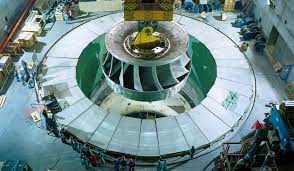
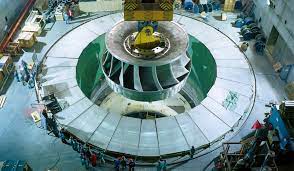
Comprehensive services for hydropower installation to harness renewable energy efficiently, delivering end-to-end solutions for sustainable power generation from water resources. This includes run-of-river systems, storage-based hydropower plants, pumped storage facilities, and low-head or small-scale hydro installations. Our capabilities span from site assessment and hydrological studies through to electromechanical equipment selection, turbine and generator installation (including Francis, Kaplan, Pelton, and cross-flow turbines), penstock fabrication and placement, control system integration, grid connection, and commissioning. Key technical focus areas include fish-friendly turbine design, sediment handling and erosion mitigation, flow optimization for variable hydrology, headworks and intake structure engineering, tailrace design, and integration with existing dam infrastructure for repowering projects. We also address specialized challenges such as off-grid hydropower for remote communities, hybrid systems combining hydro with solar or battery storage, environmental flow compliance, and seismic resilience for powerhouse structures. By combining hydraulic modeling with hands-on installation expertise, we ensure high plant efficiency, long-term mechanical reliability, and regulatory adherence while minimizing ecological impact, reducing construction timelines, and maximizing renewable energy output across diverse site conditions.

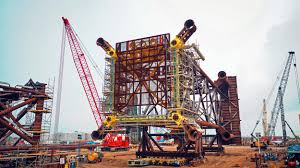
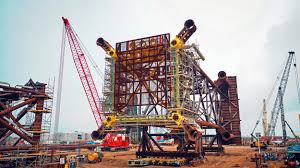
Expertise in the full lifecycle engineering, fabrication, and installation of offshore platforms, delivering innovative and cost-effective solutions for complex marine construction challenges. This includes fixed jacket platforms, compliant towers, floating production systems (such as semi-submersibles, spar platforms, and tension-leg platforms), as well as subsea templates and deepwater structures. Our capabilities span from concept selection and front-end engineering design (FEED) through to detailed structural analysis, transportation and offshore heavy-lift installation, hook-up and commissioning, and lifetime integrity management. Key technical focus areas include dynamic riser system integration, mooring system design, corrosion protection (including cathodic protection and advanced coatings), vessel motion response analysis, and fatigue life assessment under harsh metocean conditions. We also address specialized challenges such as ice-loading for arctic environments, seismic design for active subduction zones, brownfield modifications on existing platforms, and decommissioning strategies. By combining computational modeling with practical offshore execution expertise, we ensure platform safety, operational reliability, and regulatory compliance while reducing installation risks, minimizing weather-related downtime, and optimizing total installed cost across even the most demanding deepwater and harsh-environment projects.


Offshore Platforms

Innovative Infrastructure Solutions for Tomorrow

At GV Management, we specialize in project design and construction of diverse infrastructures, including dams, bridges, tunnels, and hydropower installations, ensuring quality and sustainability in every project.

A large bridge under construction with extensive scaffolding and a highway passing underneath. Several vehicles are visible on the road. There are warning signs displaying a speed limit of 60. The sky is clear, and a banner displaying safety information is attached to the structure.
Your Trusted Construction Partner
Engineering Excellence in Design

Our expertise extends to cable-stayed bridges, offshore platforms, and underwater tunnels, delivering innovative solutions that meet the highest standards of safety and efficiency in the construction industry.

Most of the existing bridges across the Netherlands and the rest of Europe were constructed between 1950 and 1970. These structures, which often serve as critical links in transport networks, are not only approaching or exceeding their original design lifespan but were also developed based on older standards and traffic assumptions that no longer match the current loading requirements defined in modern codes such as Eurocode (EN 1992-2) and the Dutch NEN 8702. Under these updated standards, a large number of these bridges are classified as structurally insufficient. However, the theoretical structural performance predicted by calculations does not always reflect how a bridge behaves in reality. This means that some bridges may be marked for replacement or strengthening even when they do not actually need major structural work. Structural health monitoring (SHM) systems offer a solution by providing real-world data on actual bridge behavior and failure risks. With this information, asset managers can schedule interventions that are precisely timed and appropriately scaledneither too early nor too late, and neither excessive nor insufficient. The anticipated benefits include significantly lower maintenance costs, reduced traffic disruptions, and improved overall safety.


A close-up of a historic European bridge equipped with modern sensors for structural health monitoring.A close-up of a historic European bridge equipped with modern sensors for structural health monitoring.

130+

150

Trusted Experts

Proven Safe

Dramatic low-angle view of a futuristic parametric bridge structure with curved steel trusses across a wide water channel at dusk, showing smart sensor illuminated nodes.

Structural Innovation

The Future of Bridge Design: New Typologies and Shapes

The next generation of bridges will not simply repeat familiar forms of the past. Structural designers are exploring entirely new typologies that respond to demands for longer spans, lighter structures, faster construction, and lower environmental impact. This shift is being driven by a combination of pressures that older bridge types were never designed to address together: growing traffic loads, aging infrastructure, scarce materials, ambitious carbon-reduction targets, rapid urbanization, and increasingly severe weather events. At the same time, advances in computation, materials science, robotics, and sensor technology are opening design possibilities that were once theoretical or impossible to build at scale. The result is a period of unusually intense experimentation in bridge form, where geometry, material behavior, construction method, and lifecycle performance are being considered as one integrated problem rather than as separate stages.

Longer spans are pushing designers beyond conventional suspension and cable-stayed solutions toward hybrid systems that combine cable, arch, truss, and shell action in novel ways. Lighter structures are being pursued through ultra-high-performance concrete, fiber-reinforced polymers, aluminum alloys, and composite decks that reduce dead load and allow foundations to be smaller and less intrusive. Faster construction is encouraging modular, prefabricated, and 3D-printed components that can be assembled rapidly with minimal disruption to traffic, waterways, or communities. Lower environmental impact is driving material efficiency, recycled content, reusable components, and designs that require less maintenance over time. These demands do not simply refine existing bridge types; they create pressure for entirely new typologies that can satisfy several objectives at once.

Among the emerging directions are adaptive bridges that change stiffness, damping, or shape in response to traffic, wind, or seismic activity. Bio-inspired structures draw from bones, shells, trees, and webs to create hierarchical geometries that are strong, lightweight, and damage-tolerant. Tensegrity and origami-based systems offer deployable or reconfigurable forms that can be transported compactly and erected quickly. Floating and submerged bridge concepts are being reconsidered for deep-water crossings where conventional piers are impractical. Kinetic and temporary bridges may serve emergency response, military logistics, or rapidly changing urban conditions. Each of these typologies carries its own structural logic, and each benefits from the ability to simulate thousands of variants before any physical prototype is built.

Digital tools are inseparable from this future. Generative design and artificial intelligence can explore vast design spaces, proposing shapes that humans might not imagine and then testing them against strength, stiffness, fatigue, cost, and constructability criteria. Topology optimization can remove unnecessary material while preserving performance, producing forms that look organic because they follow force paths rather than convention. Digital twins will not be added after construction but will be born alongside the design, providing a continuous virtual counterpart that monitors performance, predicts maintenance needs, and informs decisions throughout the lifecycle. Wireless strain sensors and other monitoring devices will be embedded during fabrication, making the bridge self-aware from the first day of service. Over time, data from these sensors will feed back into design models, allowing future bridges to benefit from the real behavior of earlier ones.

The aesthetic dimension of these new typologies is equally important. As bridges become more efficient and more closely tied to their environmental and functional context, their shapes will increasingly express structural honesty, lightness, and flow. Long spans may become slimmer and more graceful, supports may become fewer and more sculptural, and connections may become nearly invisible. Beauty will not be applied as decoration but will emerge from the pursuit of performance. The future of bridge design is therefore not only about crossing obstacles more efficiently; it is about creating structures that are safer, more durable, more adaptable, and more responsive to the communities and landscapes they serve. The next generation of bridges will be defined by this integration of new typologies, advanced materials, intelligent monitoring, and responsible design, representing a true evolution in structural engineering rather than merely an incremental improvement.

Generative Design & Computational Geometry

Advanced Materials & Rapid Assembly

Embedded Smart Sensing Systems

Algorithmic structural synthesis rethinks bridge design by starting with loads and supports rather than a predetermined shape. The algorithm iteratively places material only along the precise paths that stresses follow, so mass distribution becomes a direct expression of internal force flow. The result is sculpturally fluid profiles with continuous curves and tapering sections that look organic because they follow structural logic, not convention. By aligning material with stress vectors, the bridge achieves greater span capacity while using far less steel and concrete. Lower dead load reduces foundation and cable demands, cuts embodied carbon, and improves aerodynamic and fatigue performance. As computational power grows, this approach will let engineers explore thousands of alternatives and converge on forms that are stronger, lighter, more sustainable, and more elegant than conventional methods can produce.

Ultra-high performance concrete and high-tenacity carbon composites sharply reduce dead weight, enabling thinner, stronger bridge elements that can span greater distances with less material. Lighter components can be prefabricated off-site in controlled conditions, transported easily, and assembled quickly with minimal disruption to traffic and communities. These advanced materials also resist corrosion, freeze-thaw damage, and chemical attack far better than conventional alternatives, extending service life and boosting long-term climate resilience. The result is lower maintenance needs, reduced carbon footprint, and infrastructure that can better withstand increasingly severe environmental conditions while supporting rapid, high-quality construction.

Integrated fiber-optic telemetry and continuous health monitoring transform bridge geometries into responsive digital structures by embedding sensing capability directly into the physical form. Fiber-optic cables, either surface-mounted or cast into concrete and composite elements, act as thousands of distributed sensors along the entire length of a bridge, capturing strain, temperature, vibration, and acoustic emissions in real time. This continuous stream of data feeds directly into a digital twin, where algorithms compare actual behavior against predicted performance and flag even subtle deviations that might indicate fatigue, cracking, corrosion, or load redistribution.

The new Tevere Bridge , Rome Italy

GVME Engineering presents in Rome a bridge that redefines what a crossing can be, transforming it from a purely functional link into a place where people come to linger, walk, and enjoy the landscape. Its shape departs radically from conventional bridge typologies, adopting a flowing, curvilinear form that rises and falls gently, creating viewing platforms, shaded walkways, and gathering spaces along its length. The structure becomes a destination, not just a passage, inviting pedestrians and cyclists to pause and take in the surroundings rather than rush across. Architecturally, the bridge is unique, with a sculptural profile that responds to its context and expresses structural honesty without sacrificing beauty. It blends into the landscape while also framing it, offering panoramic views and moments of rest.

The design innovation lies in treating the bridge as a public space first and a piece of infrastructure second. Widened decks create terraces for seating, observation, and informal gatherings. The path is not a straight line but a gentle curve that slows movement and encourages exploration. Structural elements become architectural features, with supports that double as shade structures or sculptural anchors. The bridge connects not only two banks but also two experiences, weaving together the natural environment and the built environment into a seamless whole.

This is a bridge that serves movement and contemplation equally, transforming a functional crossing into a cultural and social landmark that belongs to the city and its people. It is a place to meet, to rest, to photograph, and to remember. By making the bridge a destination, GVME Engineering shows that infrastructure can be more than efficient—it can be generous, beautiful, and deeply connected to the landscape it inhabits.

We know infrastructures the way a doctor knows the human body: not as separate parts, but as a living system where every element breathes with the others. Roads, railways, bridges, tunnels, dams, ports, power plants, water networks each is a line in a larger story of movement, energy, and survival. Our expertise does not stop at the drawing board or the construction fence. We design with the earth's resistance in mind, and we build with the weather's temper at our shoulder. From the first soil investigation to the final bolt tightened at midnight, we are there. We pour concrete that will outlast its architects. We lay tracks that will not buckle under heat nor shatter under freight. We carve tunnels through mountains that once divided valleys, and we raise bridges over waters that once separated families. But we also advise before the first line is drawn. Strategic advisory sits at our left hand: we read the political winds, the financial currents, the regulatory traps, and the silent risks that kill megaprojects in their sleep. Valuation consultants of infrastructure stand at our right: we price the unpriced geological uncertainty, labor volatility, material inflation, the cost of a year of delay.

Contact Us

Terms Of Service Privacy Policy CCPA Notice cookie setting

Expertise

Bridges Design and Construction

Project Management in offshore Construction

Project Management in Bridges, Tunnel , Platform

Project Management in Nuclear Power Plant Construction

Project Management in hydropower Plant Construction

Strategic Advisory

Valuation Consultants of Infrastructure
Project Management
Engineering Design
Construction Oversight
Feasibility Studies
Risk Assessment
Lifecycle Costing
Asset Management
Contract & Claims Management
Quality Assurance & Control
Health, Safety & Environment (HSE)
Procurement & Supply Chain
Commissioning & Handover

© 1992. All rights reserved.